Quick answer
After renovation work, wait until dusty trades are complete, remove visible debris, and clean from high surfaces to low floors with methods suited to the material. Do not treat possible lead, asbestos, or active silica dust as an ordinary house-cleaning task. Those conditions need the appropriate qualified contractor and safety process.
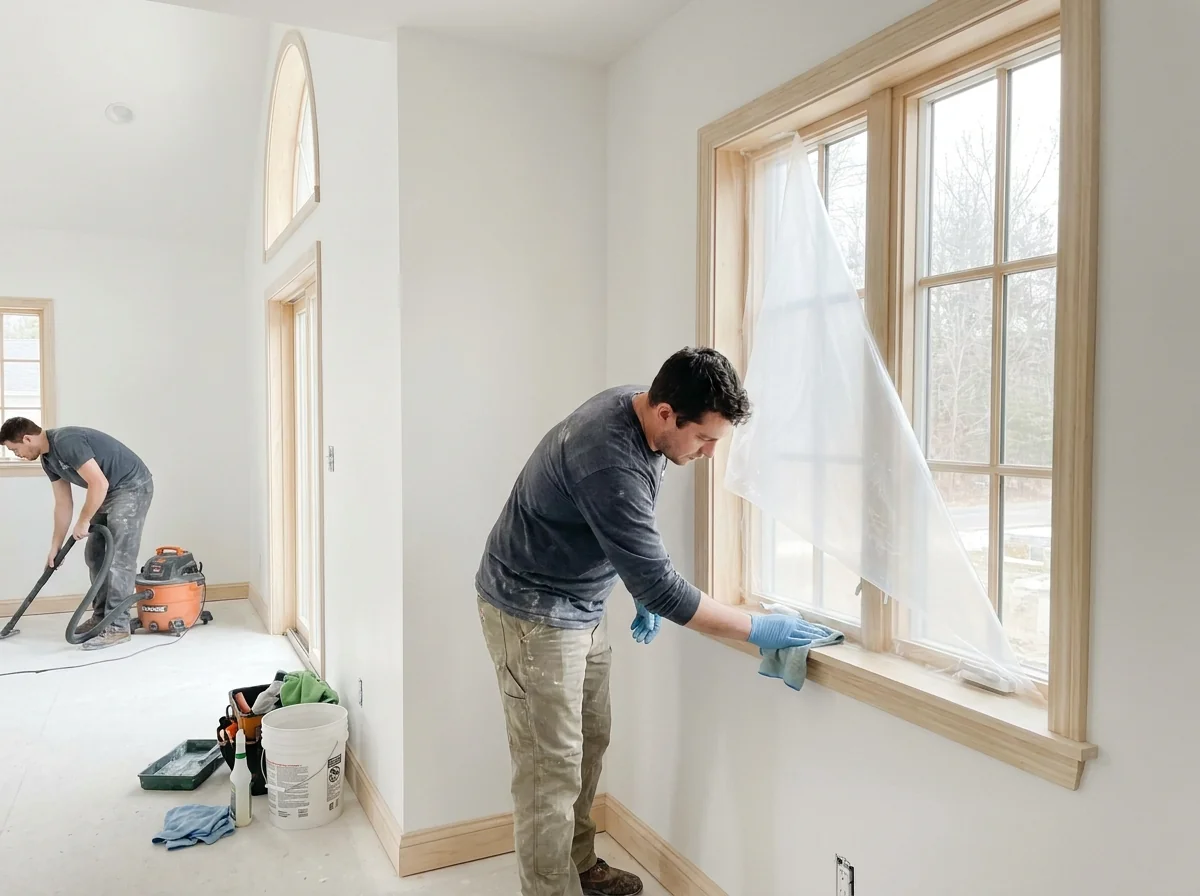
Drywall sanding and cutting work spread dust beyond the room where the work happened. It settles on trim, cabinet tops, hardware, blinds, and inside drawers. A quick vacuum-and-mop often makes the room look finished while leaving the detail work for later.
Sequence matters in renovation dust cleanup
- Confirm the work is finished. Cleaning while sanding, cutting, or painting continues means repeating the same work.
- Identify hazards first. Homes built before 1978 may have lead-paint concerns; suspected asbestos and hazardous debris are not routine cleaning work.
- Clean high to low. Start with reachable ledges, trim, fixtures, cabinets, and tracks before floor edges and the final floor pass.
- Ventilate appropriately. Follow product labels and the contractor’s safety controls; do not use open windows as a substitute for hazard containment.
Why a shop vacuum is not a universal answer
The EPA distinguishes a vacuum designed as HEPA equipment from a machine merely fitted with a HEPA filter. That distinction matters for renovation dust and lead-safe work. A cleaning company should explain its scope and decline conditions that call for specialized remediation.
When to book post-construction cleaning
Bring the cleaner into the schedule before the final walkthrough, listing photos, move-in, or opening. Share the project type, square footage, current phase, available utilities, materials, and deadline. Our post-construction cleaning service is designed for the detailed handoff after construction; our project checklist explains rough, detail, and final passes.
Sources: EPA indoor-air guidance for remodeling and EPA guidance on HEPA vacuums for renovation cleanup.